Pioneer Builders Homeowner Journal · King County
A Contractor's Warning: Fraud Cost Americans $12.5 Billion-and It's Not a Victimless Crime
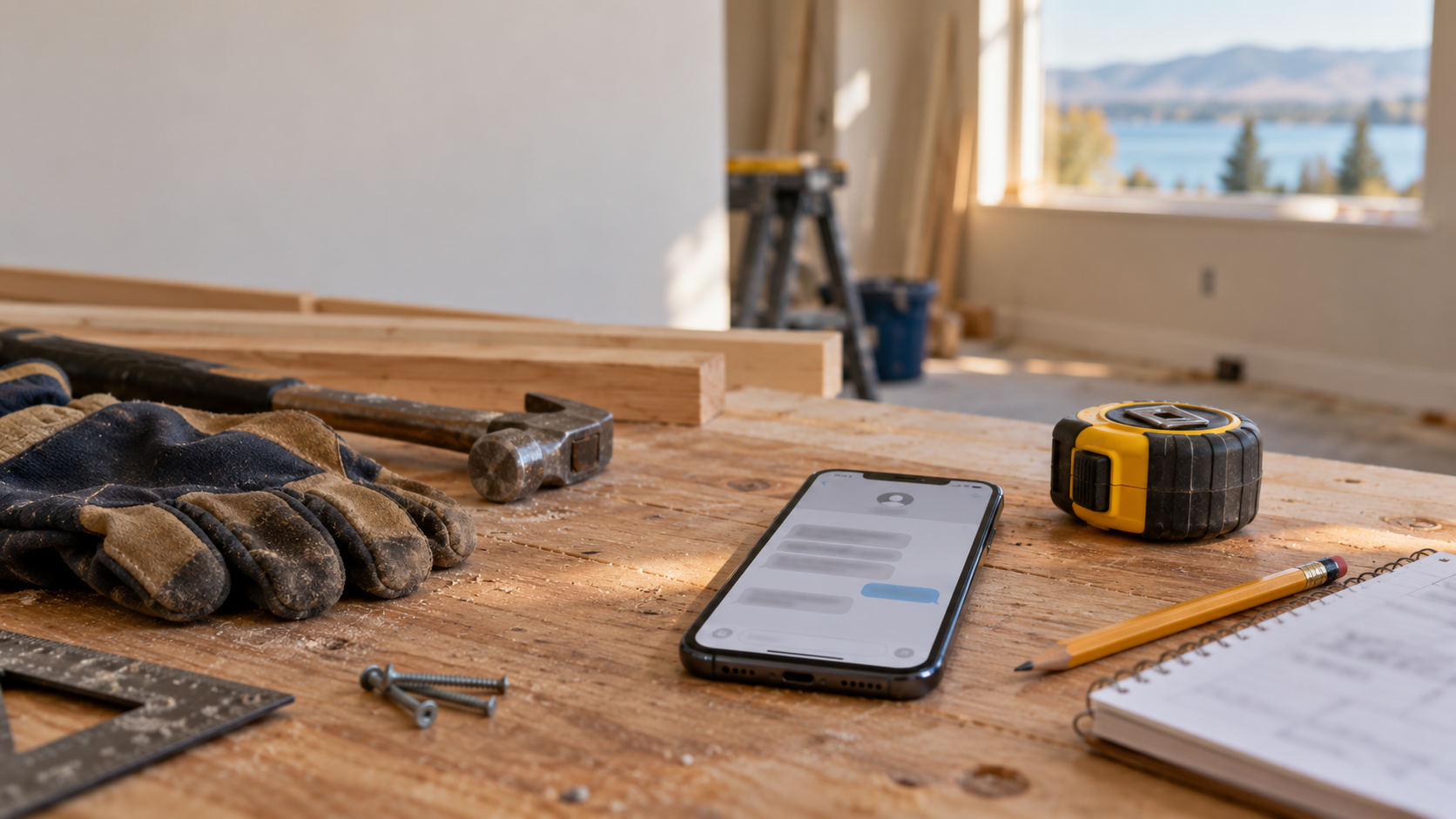
I build for a living here on the Westside, and I get suspicious texts, calls, and phony job leads more often than most people would believe. Someone claims they just closed on a house up the plateau. They need work started today. They push everything over to WhatsApp. Then come the odd payment requests, the checks written for too much, and the pressure to send money back through Zelle or Cash App.
I'm writing this for my neighbors around King County-homeowners in Maple Valley and Covington, renters in Kent and Renton, landlords in Auburn and Federal Way, and families out toward Black Diamond and Enumclaw. Whether you own, rent, run a crew, manage buildings, or sell real estate, the same patterns keep repeating. Spotting them early is the whole game.
Why this isn't a victimless crime
It's easy to assume scams only nick a little money from people who "should have known better." That is not what I see in the field. I see retirees talked out of a chunk of their savings, young adults chasing a first job who lose a paycheck they never earned, and small trades who pour real labor into a job and never get paid. In 2024, people reported losing more than $12.5 billion to fraud to the Federal Trade Commission-about a 25% jump over the year before. And those are only the reported losses; a huge amount of fraud never gets reported at all.
Behind every one of those figures is a real household in a real neighborhood. The money is only part of the damage. The stress, the shame, and the way it chips at the trust we have in each other are costs too.
Fake contractor job leads and fake property claims
Here is one aimed squarely at trades and real estate folks: someone says they just bought or moved into a place-maybe a new build off the Maple Valley Highway or a rental near Kent Station-and they need work handled urgently. They won't meet on site, they push the talk to WhatsApp, and soon there's a check written for "more than the deposit" and a request to wire back the difference. That overpayment is the trick: the check bounces days later, and you eat whatever you "refunded."
The rental version targets tenants: a "landlord" who can't show the unit in person, wants a deposit before you ever see a lease, and always has a reason they're out of town. In a market this tight, that pressure feels normal-which is exactly why it works. If money has to move before anyone can verify anything, treat it as a red flag.
Fake checks, overpayments, and payment-diversion scams
Fake checks can look sharp, and a bank may even show the funds as "available" for a day or two before clawing them back. Payment-diversion scams are quieter: someone impersonates a contractor, supplier, or title company and emails "updated" wire instructions right when a payment is due. In the FTC's 2024 data, people reported losing more to bank transfers and cryptocurrency than to all other payment methods combined. Always confirm any change in payment instructions by calling a number you already had on file, never one from the new email.
Red flags when you're hiring (homeowners & renters)
Watch for pressure to decide this minute, demands for the full amount up front, and requests to pay only by gift card, wire, Zelle, Cash App, or crypto. Be wary of anyone who won't share a Washington contractor registration number, won't meet you at the property, keeps changing their story, or bristles when you mention a second bid. Plenty of honest work happens fast in busy season, but a real contractor won't punish you for slowing down to verify. In Washington you can and should check a contractor's registration, bond, and insurance before a dollar changes hands.
Red flags when you're receiving leads (contractors & realtors)
If a "client" won't get on a normal phone or video call, insists on WhatsApp only, sends a check for more than you agreed to, or asks you to pass money to a "mover," "inspector," or "stager," stop. The FTC reported losses to business and job-opportunity scams topped $750 million in 2024, with job and employment-agency scam reports tripling since 2020. Legitimate customers and employers never need you as their payment middleman. When a lead feels engineered to rush you, it usually is.
Romance, impersonation, and AI-generated scams
Some of the most painful cases start on social media: a warm stranger, a can't-miss investment tip, a "relative" suddenly in trouble. Investment scams were the single biggest reported loss category in the FTC's 2024 numbers at $5.7 billion, with imposter scams close behind. Today the pitch can be dressed up with AI-generated photos, cloned voices, and convincing profiles. A voice that sounds exactly like your grandkid stuck on I-405 may not be your grandkid at all. When strong emotion and urgency arrive together with a money request, slow down and verify through a separate channel you already trust.
Let me be clear: the problem is the behavior and the scheme, not any particular person, profile, nationality, neighbor, or listing. Judge the request, not the accent, the photo, or where someone says they're from.
Protecting kids, young adults, and older relatives
Young people get hit hard by job, gaming, and payment-app scams; older adults get targeted for tech-support and government-imposter scams, and the FTC noted government-imposter losses climbing again in 2024. The best protection isn't a lecture-it's making it normal in your family to pause and ask, "Does this feel off?" Agree ahead of time that no real employer, agency, or family member will ever demand secrecy or gift-card payments. A two-minute phone call can stop a loss cold.
What to do when something feels off
Pause before you act. Verify the person or company yourself, using contact details you dig up-not the ones handed to you. Save the texts, emails, and screenshots. And don't send money or personal information while you're still unsure. It's always fine to say, "I need to check on this and I'll get back to you." Anyone honest will respect that.
Where to report it (official resources)
If you've been targeted or hit, reporting helps you and helps your neighbors:
- FTC: Report fraud at reportfraud.ftc.gov.
- Washington State Attorney General: File a consumer complaint at atg.wa.gov/file-complaint or call 1-800-551-4636.
- Washington L&I: Verify a contractor's registration, bond, and insurance at L&I's Verify a Contractor tool.
Three Books That Make You Harder to Scam
Understanding the psychology behind fraud is one of the best defenses there is. These three have helped me see the tactics more clearly.
The Confidence Game - Maria Konnikova
A sharp look at why intelligent, careful people still fall for con artists-and how confidence tricks are built.
The Art of Deception - Kevin Mitnick & William L. Simon
The famed social engineer explains how people-not just computers-get manipulated, and how to recognize the pressure tactics.
Generative AI For Dummies - Pam Baker
A plain-language primer on how modern AI works-useful for understanding the AI-generated photos, voices, and messages now used in scams.
These books can help readers understand how deception works, recognize pressure tactics, and slow down before reacting.
Hiring a contractor in King County?
When in doubt, talk to a licensed local you can actually meet.
Pioneer Builders is a licensed, bonded, and insured Washington contractor serving Maple Valley, Covington, Kent, Renton, Auburn, and the broader Seattle area. If you're unsure whether a quote, a lead, or a "too good to be true" offer is legitimate, reach out-we're happy to give you an honest read.
Affiliate notice: As an Amazon Associate I earn from qualifying purchases. Book links are affiliate links; commissions do not increase the purchaser's price. This article is general information for King County and Seattle-area residents and is not legal or financial advice. Verify contractor registration through Washington L&I before any money changes hands.